
Your Current Digital Situation
Your website now functions as a basic lead generation tool rather than just a digital business card.
You've implemented fundamental conversion elements and are capturing some leads, but your digital marketing systems lack the cohesion and optimization needed to deliver predictable, scalable results.
This positions you perfectly for strategic enhancements
– you've proven the concept of digital lead generation and are now ready to build sophisticated systems that consistently deliver high-quality prospects while expanding your market reach.
Emerging Lead Generation with Room for Improvement
Your website starts to attract leads, though conversion rates still need work.
Inconsistent Content Strategy and Execution
A content plan exists, but the production and scheduling lack consistency and depth.
Partial Integration of Multiple Marketing Channels
Several digital channels are in use, but they aren’t fully coordinated or optimized.
Basic Email Marketing with Minimal Segmentation
You’re building an email list, but there’s little customization or targeted follow-up.
Underutilized Analytics Tools
While tracking tools are set up, the data isn’t fully leveraged to improve marketing efforts.
Opportunity for Greater Marketing Integration
Efforts across channels show potential, yet they require better alignment to drive results.
Critical Growth Strategies
Focus on these areas to advance to the next stage of digital marketing maturity.
Priority 1: Conversion Rate Optimization
Your website generates leads but has significant untapped conversion potential.
Exactly What To Do:
1.1
Implement Strategic A/B Testing for Key Landing Pages
"Strategically designed CTAs can increase conversion rates by up to 45% across digital platforms" (Unbounce Digital Marketing Report, 2024).
Simple Implementation Steps:
- Identify your top 3 landing pages with the highest traffic but below-average conversion rates.
- Create variant versions with single variable changes (headline, CTA button color, form length).
- Use Google Optimize (free) to split traffic between versions and measure conversion differences.
- AI Integration: Use AI tools like Heyday AI to personalize CTA messaging based on user behavior.

1.2
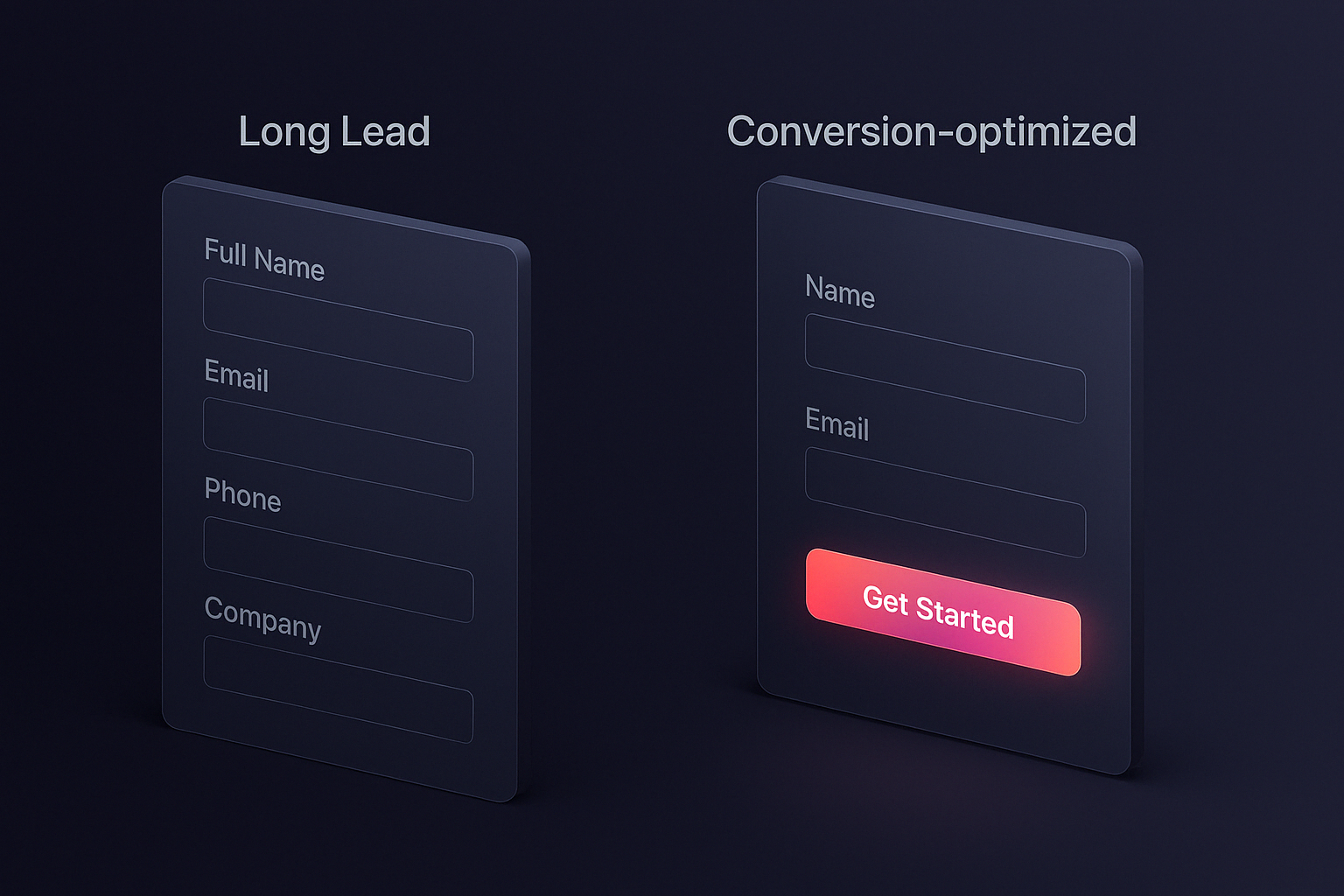
Streamline Your Conversion Path with Friction Reduction
"Targeted content resources now convert up to 75% more effectively when precisely aligned with audience needs" (Content Marketing Institute Lead Generation Study, 2024).
Simple Implementation Steps:
- Reduce form fields to the essential minimum (name, email, and one qualifying question).
- Add progress indicators to multi-step forms showing exactly how many steps remain.
- Implement inline form validation that provides immediate feedback on errors.
1.3
Implement Targeted Exit-Intent Offers
"Authentic social proof now influences purchase decisions for 96% of consumers across digital platforms" (Nielsen Consumer Trust Index, 2024).
Simple Implementation Steps:
- Create a special offer popup that appears when visitors show exit intent (moving cursor toward closing tab).
- Craft a compelling headline addressing a specific pain point with a time-sensitive solution.
- Include a simplified form requiring minimal information (email only, if possible).

1.4
AI-Driven Personalization for Landing Pages
Simple Implementation Steps:
- Create a special offer popup that appears when visitors show exit intent (moving cursor toward closing tab).
- Craft a compelling headline addressing a specific pain point with a time-sensitive solution.
- Include a simplified form requiring minimal information (email only, if possible).
Priority 2: Marketing Channel Integration
Without seeing what’s working, you’re essentially flying blind with your website.
Exactly What To Do:
2.1
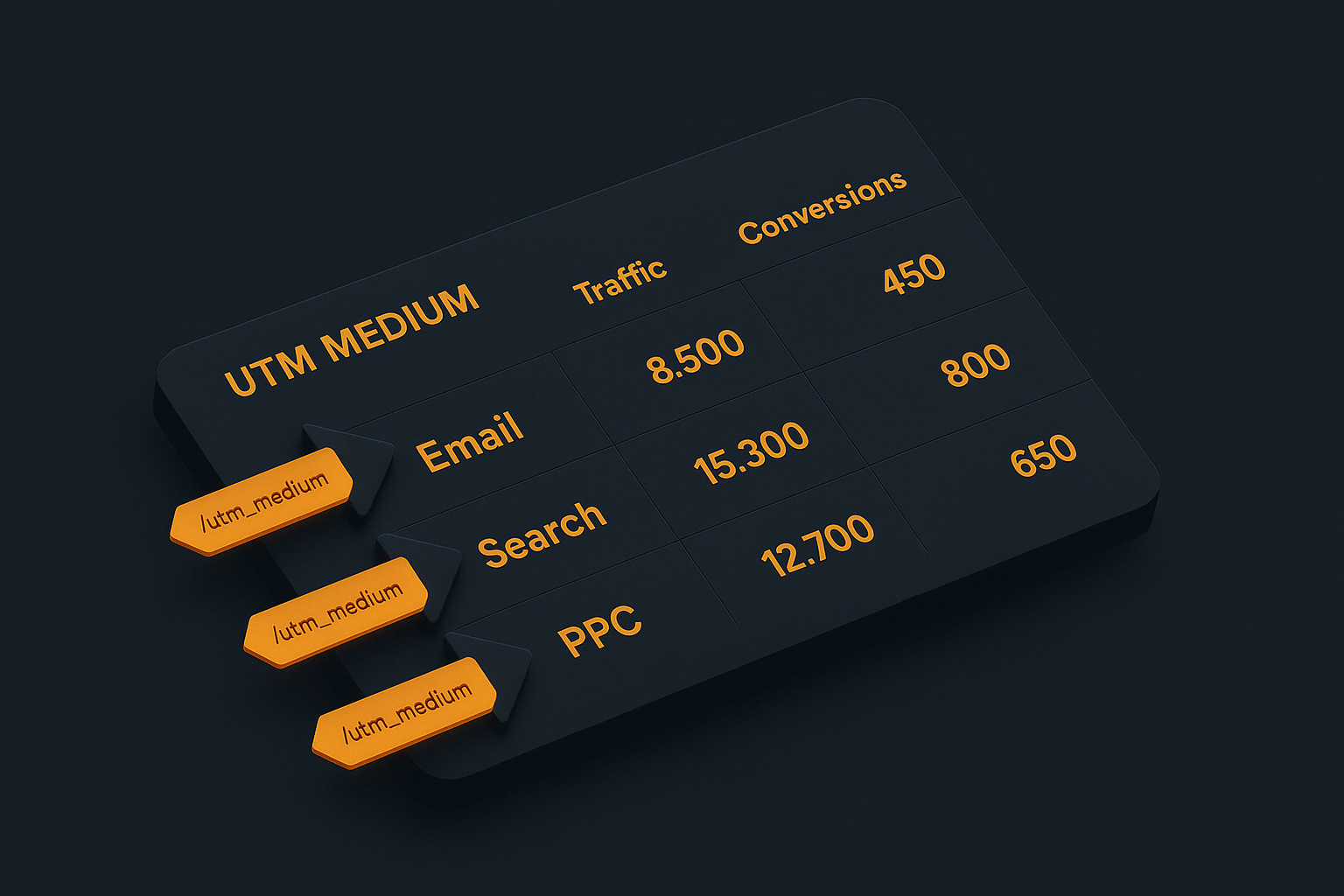
Implement Cross-Channel Attribution Tracking
"Organizations leveraging advanced web analytics see performance improvements of up to 25% through data-driven insights" (Gartner Digital Marketing Performance Report, 2024).
Simple Implementation Steps:
- Set up UTM parameters for all marketing links (email, social, ads) using Google’s Campaign URL Builder.
- Create a custom dashboard in Google Analytics to visualize which channels drive not just traffic, but actual conversions.
- Implement tracking pixels for all active advertising platforms (Meta, Google, LinkedIn).
- AI Integration: Implement AI analytics tools like Google Looker to predict high-performing channels.
2.2
Develop an Integrated Content Distribution System
Simple Implementation Steps:
- Create a content repurposing matrix showing how each piece of content can be adapted for different channels.
- Implement a scheduling system (e.g., HootSuite, Buffer) to coordinate multi-channel publishing.
- Develop a standard operating procedure for promoting new content across email, social, and your website.
- AI Integration: Use AI content planners like Jasper to generate optimized distribution schedules.

2.3
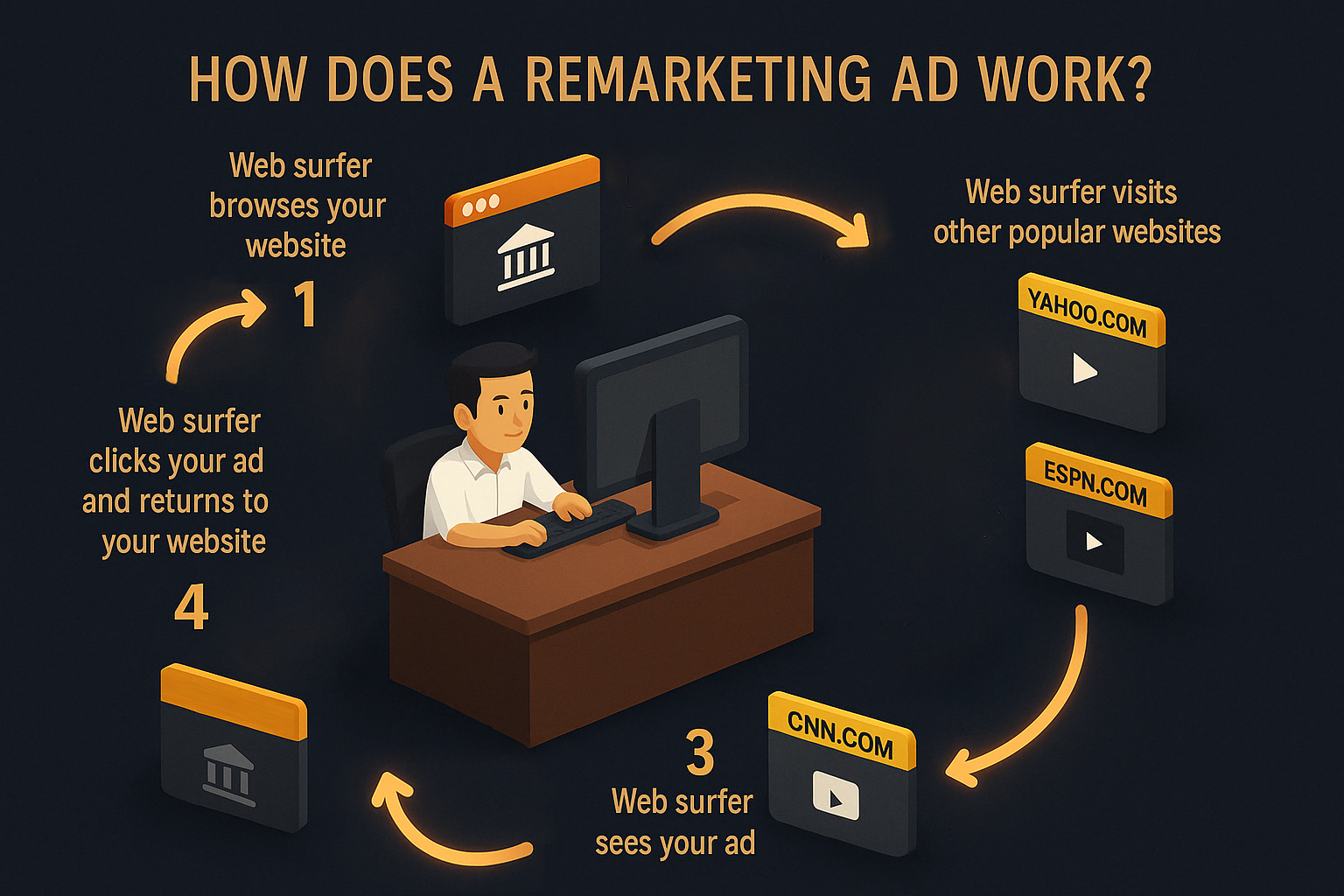
Implement Retargeting Campaigns Based on Website Behavior
Simple Implementation Steps:
- Configure your Meta Pixel to track specific page visits and actions on your website.
- Create custom audiences based on high-intent behaviors (visited pricing page, started but abandoned forms).
- Develop targeted ad campaigns with specific messaging for each audience segment.
- AI Integration: Use AI ad platforms like Smartly.io to automate and optimize retargeting campaigns.
2.4
AI-Powered Audience Segmentation
Simple Implementation Steps:
- Use AI tools like Segment.ai to analyze audience behavior.
- Create detailed buyer personas using AI insights.
- Develop targeted messaging for each segment.
Priority 3: Advanced Lead Nurturing
When people visit but aren’t ready to contact you immediately, you need a system to stay connected.
Exactly What To Do:
3.1
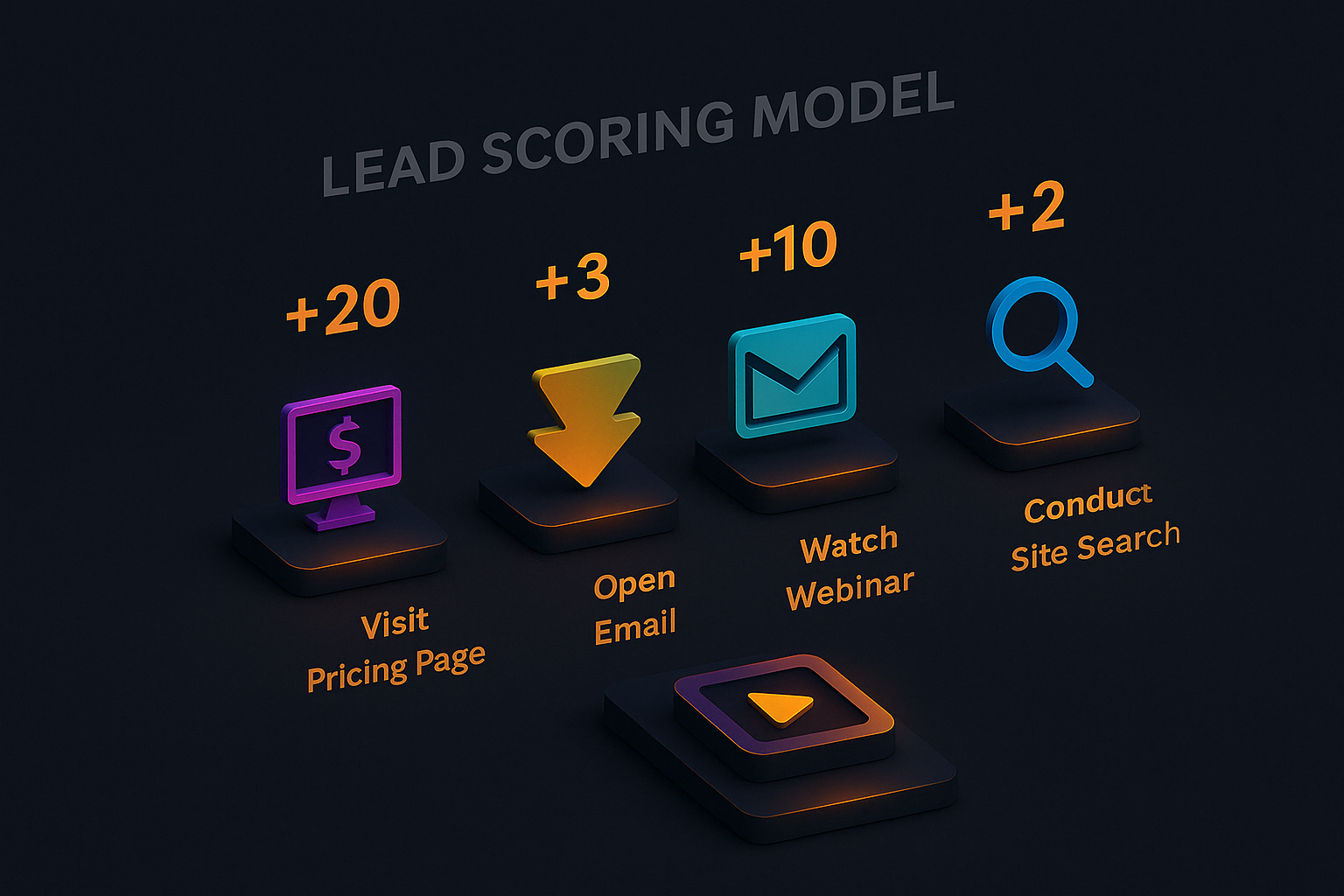
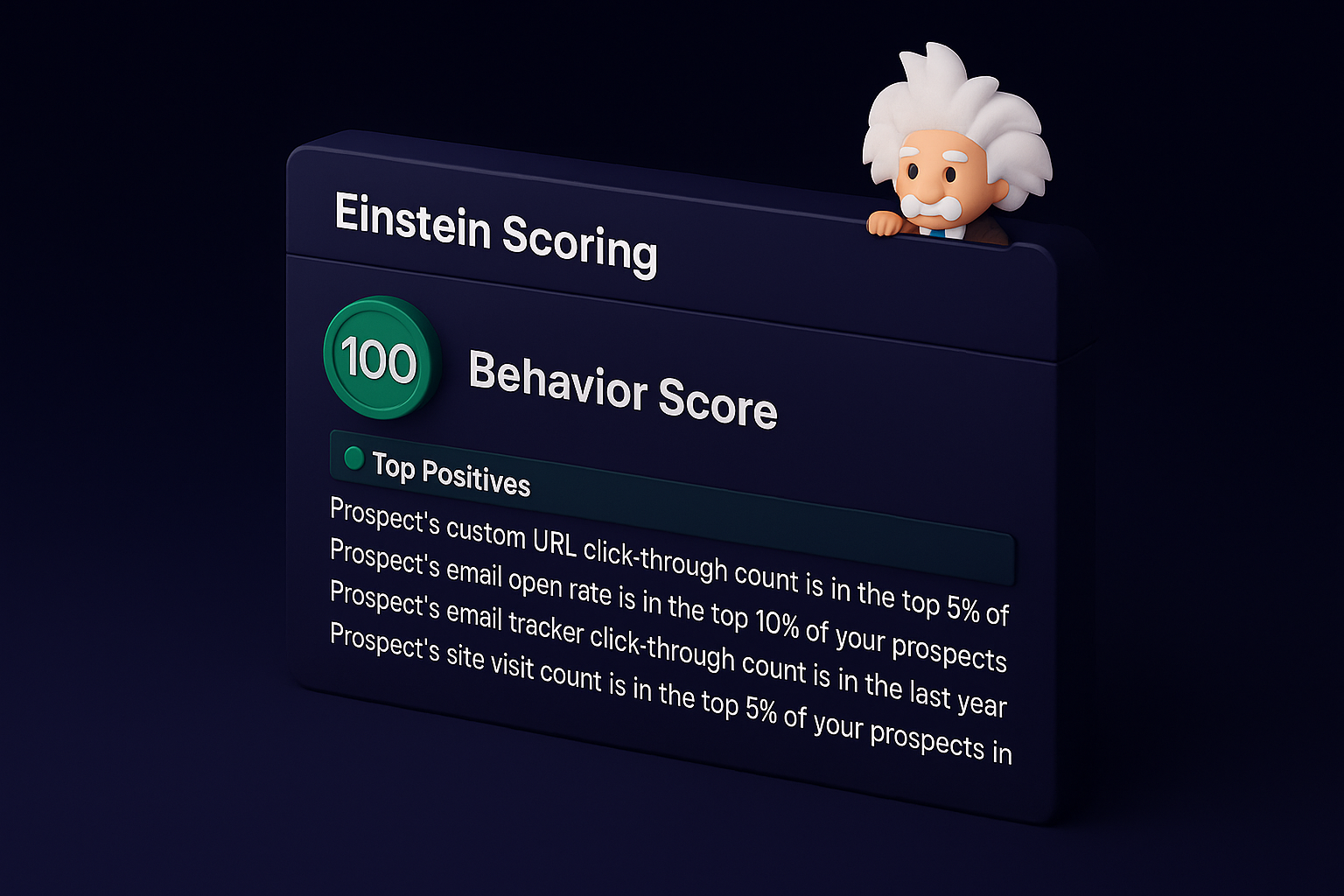
Implement Lead Scoring Based on Engagement
Simple Implementation Steps:
- Define key engagement actions and assign point values to each (email opens = 1 point, clicks = 3 points, form submissions = 10 points).
- Use a CRM or email marketing tool that supports lead scoring (ActiveCampaign, HubSpot).
- Create automated workflows that alert your team when leads reach qualification thresholds.
- AI Integration: Implement AI scoring tools like Salesforce Einstein to predict lead quality.
3.2
Develop Segment-Specific Nurturing Sequences
Simple Implementation Steps:
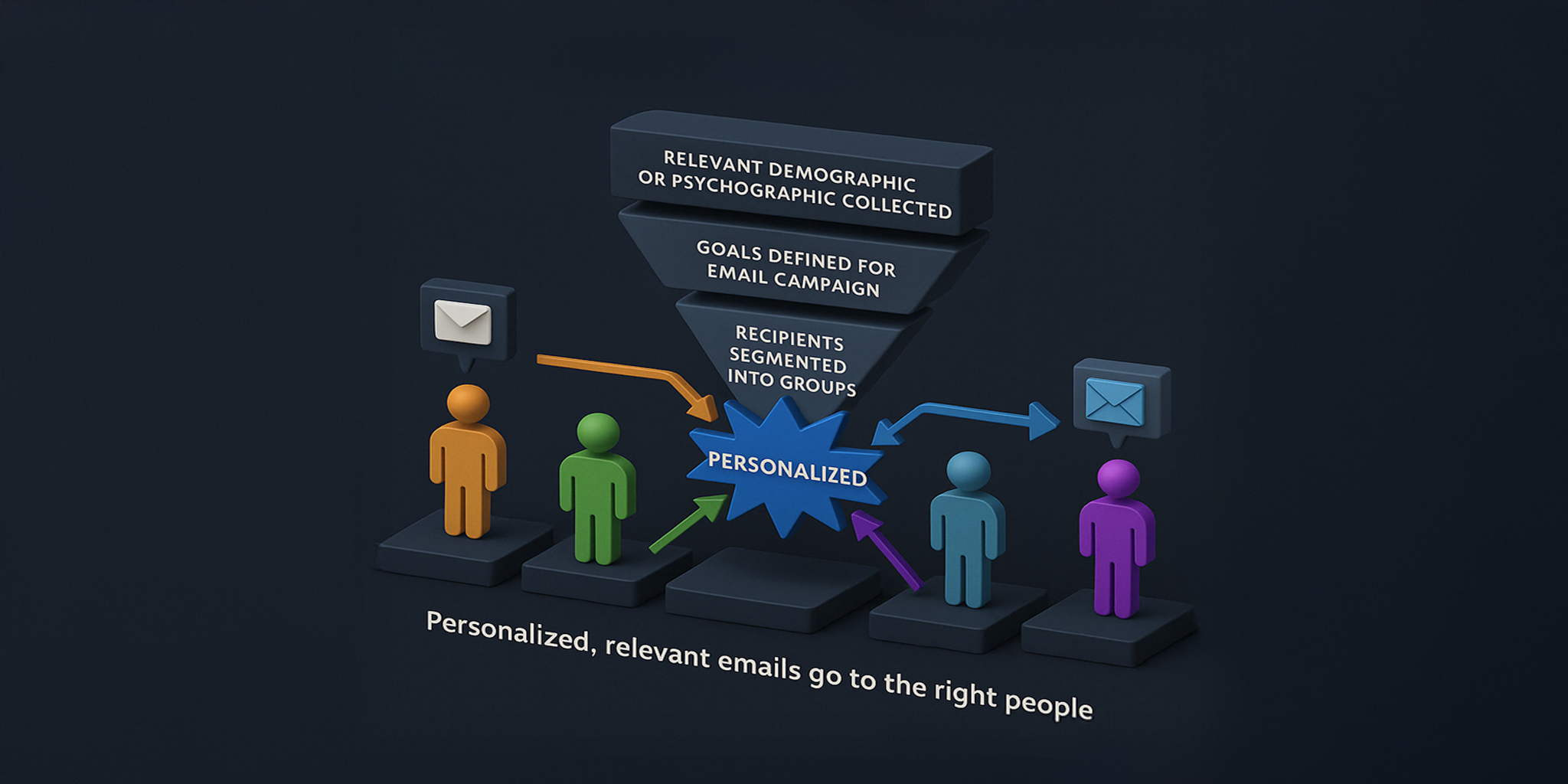
1. Segment smart.
Group your audience into 2–3 high-impact buckets based on behavior:
-
New leads (clicked but never bought)
-
Warm prospects (viewed pricing, no action)
-
Loyal customers (inactive 30+ days)
2. Speak directly to their headspace.
Write 3–5 emails per segment. Each one should answer a question they’re already asking themselves.
-
“Can I trust this?” → Send a proof-packed story
-
“Is this worth it?” → Break down ROI in plain English
-
“Is this for people like me?” → Use social proof that mirrors them
3. Trigger emails based on behavior.
Set up logic like:
-
-
Clicked “pricing” → Show cost breakdown + customer result
-
Ignored last 3 emails → Send plain-text “Want me to stop?” message
-
Bought → Kickoff post-purchase onboarding or upsell.
-
4. AI Integration: Use AI email tools like Mailchimp AI to generate personalized sequence content.
3.3
Implement Multimedia Content in Nurturing Sequences
"Williams & Patel (2025) found engagement-based lead scoring increases sales conversions by 44.2% and shortens sales cycles by 37.1%."
Simple Implementation Steps:
- Create short-form video content (2-3 minutes) addressing frequently asked questions.
- Record brief audio snippets delivering valuable tips related to your services.
- Develop visual infographics illustrating key concepts or processes.
- AI Integration: Use AI video tools like Lumen5 to create engaging video content quickly.

3.4
AI-Enhanced Predictive Analytics for Lead Nurturing
Simple Implementation Steps:
- Use AI tools like Pardot to analyze lead behavior patterns.
- Develop predictive models to identify high-value leads.
- Create priority nurturing tracks for high-intent leads.
Your Roadmap to the Scaling Systems Phase
Complete these specific actions to advance to the next stage:
Optimize Your Conversion Funnel
Implement Multi-Factorial A/B Testing on Key Pages Using Google Optimize or VWO:
- 5-element testing formula:
- Headline (problem vs. benefit framing)
- Social proof placement (top vs. beside lead gen form)
- Form length (minimal vs. essential fields)
- CTA wording (value-based vs. action-based)
- Risk reversal (guarantees, trial offers)
- Implementation:
- Test one variable at a time → Require min.
- 100 conversions per test → Implement winners progressively
- Example: A B2B software company tested “Reduce Project Delays by 43%” (problem framing) against “Accelerate Project Delivery by 43%” (benefit framing). The benefit-framed headline increased demo requests by 27%. They then tested the winning headline with testimonials beside vs. above the form, finding the beside placement drove 18% more conversions.
Create OCEAN Personality-Based Message Targeting Using Your Email Platform:
- OCEAN targeting formula:
- Openness (innovation messaging)
- Conscientiousness (detail/quality messaging)
- Extraversion (social/community messaging)
- Agreeableness (testimonial/helping messaging)
- Neuroticism (security/guarantee messaging)
- Implementation: Use website behavior patterns to infer personality traits → Deliver matched messaging
- Example: A marketing agency identified visitor segments based on behavior:
- Those who explored new/innovative services (Openness) received messaging about “cutting-edge strategies”;
- Detail-oriented visitors who downloaded comprehensive guides (Conscientiousness) received “proven 7-step methodology” messaging;
- Visitors who engaged with community content (Extraversion) saw “join industry leaders” messaging—resulting in a 31% lift in qualified leads.
Implement Progressive Profiling for Lead Capture Using HubSpot or ActiveCampaign:
- Formula: Initial form (email only) → Session 2 form (name, company) → Session 3 form (role, challenge) → Session 4+ (industry-specific questions)
- Setup: Store data in CRM → Pre-fill known fields → Request 1-2 new fields per interaction
- Example: A SaaS company reduced their initial signup form from 9 fields to just email address, increasing initial conversions by 53%. On the second visit, returning visitors saw a pre-filled form with just 2 new questions (name and company), achieving 72% completion. By the third interaction, they had complete lead profiles for 66% of prospects vs. just 41% with their original long form.
Measurable KPIs:
- Conversion Rate = (Number of Conversions ÷ Number of Page Views) × 100
- Target: Minimum 3.7%
- Example: A service page with 5,000 monthly visitors and 185 conversions has a 3.7% conversion rate
- Form Completion = (Form Submissions ÷ Form Starts) × 100
- Target: Reduce abandonment by minimum 31%
- Example: Improving from 42% form completion to 60% represents a 43% reduction in abandonment
- Exit Offer Success = (Exit Offer Conversions ÷ Exit Intent Triggers) × 100
- Target: Minimum 8% conversion
- Example: If 1,200 visitors trigger exit intent popups monthly and 96+ convert, you’ve hit the 8% target
Develop a Comprehensive Understanding of User Behavior
The Beginner’s Guide to Deploying Markov Chain Attribution Models
Based on your request, I’ll create a simplified guide for deploying Markov Chain attribution models that addresses the common friction points.
What is a Markov Chain Attribution Model (in Plain English)
A Markov Chain attribution model is simply a way to understand which marketing channels deserve credit for conversions by looking at the actual paths customers take. Unlike simpler models that give all credit to the first or last touchpoint, Markov models consider the entire customer journey.
Think of it like understanding which players on a basketball team contributed most to winning – not just who scored the final point.
Step-by-Step Implementation Guide
Step 1: Map Your Customer Journeys
What to do: Document all the ways customers interact with you before converting.
- List all your marketing channels (paid ads, email, social, direct, etc.)
- Review 10-20 actual customer journeys from your CRM or analytics
- Note which channels typically appear early, middle, and late in the journey
Example: For a consulting firm, you might discover journeys like:
- LinkedIn Ad → Website Visit → Whitepaper Download → Email → Consultation
- Direct Visit → Blog Read → Email Signup → Webinar → Consultation
Step 2: Set Up Cross-Domain Tracking
What to do: Ensure you can track users across all your digital properties.
- Implement Google Analytics 4 across all your websites and subdomains
- Set up the same tracking ID/measurement ID on all properties
- Enable cross-domain tracking in your configuration settings
Real-world tip: Start with just tracking between your main website and one landing page or subdomain. Perfect that before expanding further.
Step 3: Connect Online and Offline Touchpoints
What to do: Create a system to link digital interactions with offline events.
- Use unique UTM parameters in email links before phone calls
- Create unique coupon codes or reference numbers for each campaign
- Train your sales team to ask and record how clients found you
Simple approach: Start by just tracking one critical offline touchpoint (like phone calls) and connecting it to your digital data.
Step 4: Choose Your Implementation Method
What to do: Select the approach that matches your technical resources.
Option A: Use built-in tools (Easiest)
- Google Analytics 4’s attribution reports
- Adobe Analytics attribution features
- Dedicated platforms like Attribution or Convertro
Option B: Custom implementation (More control)
- Use R with the ChannelAttribution package
- Use Python with scikit-learn for more customization
Start with Option A unless you have specific technical requirements or data science resources.
Step 5: Collect and Prepare Your Data
What to do: Gather your customer journey data in the right format.
- Export user paths from your analytics platform
- Structure data as sequence of touchpoints ending in conversion/non-conversion
- Clean data to remove inconsistencies in channel naming
Example format:
User1: Facebook → Email → Direct → Convert
User2: Organic → Email → Abandon
User3: Direct → LinkedIn → Email → Convert
Step 6: Run Your Model and Interpret Results
What to do: Execute the model and understand what it tells you.
- Calculate removal effects (how much conversion probability drops when a channel is removed)
- Compare current budget allocation with channel importance
- Identify undervalued channels deserving more investment
Example insight: “Email contributes 35% to conversion probability but receives only 10% of our budget.”
Step 7: Test and Validate
What to do: Confirm your model’s insights reflect reality.
- Reallocate a small portion of budget based on model findings
- Compare conversion rates before and after reallocation
- Refine the model based on real-world results
Simple approach: Test with a 10% budget shift for 30 days before making major changes.
Common Obstacles and Simple Solutions
“The math is too complex”
Solution: Focus on the insights, not the mechanics. Use visualization tools to understand results rather than diving into the probability calculations.
“Our data is spread across too many systems”
Solution: Start with just your two most important systems. Create a simple CSV export/import process between them before attempting full integration.
“We can’t track offline interactions”
Solution: Use simple reference codes in your digital materials that clients can mention during offline interactions.
“Our team doesn’t understand the model’s value”
Solution: Show concrete examples: “If we shifted $10K from channel X to channel Y based on the model, we’d gain approximately 15% more conversions.”
Summary Points
- Markov Chain attribution helps you accurately credit marketing channels based on their true contribution to conversions
- Start with mapping actual customer journeys before implementing any technical solution
- Choose the simplest implementation method that meets your needs (built-in tools for beginners)
- Begin with connecting just two systems before attempting comprehensive integration
- Use simple reference codes to bridge the online-offline gap
- Test model recommendations with small budget shifts before major reallocations
- Focus on actionable insights rather than mathematical complexity
Would you like me to expand on any particular step in this process or provide more specific guidance for your business context?
Recommended Solution
GROW Website & Marketing Acceleration Package
$20,250 Value
$4850
$1,850 Total Bonus Value
No obligation. 30-minute consultation to discuss your custom implementation plan.
Trusted by Successful Founders
Ready to Transform
Your Digital Presence?
Schedule your free strategy session to discuss your custom implementation plan.